Licencing of Practical GMP and ISO Course Material
The manufacturing of therapeutic goods, operational execution within testing laboratories, and advanced research processes in biotechnology companies demand strict adherence to regulatory standards. Maintaining compliance with Good Manufacturing Practice (GMP) and International Organisation for Standardisation (ISO) requirements is a foundational operational parameter. To sustain compliance while maintaining commercial viability, life science organizations must establish robust internal training infrastructures. Developing technically accurate, regulator-aligned training curriculum from scratch requires significant resources, scientific expertise, and instructional design validation.
Talk to Us about Licensing high-quality, pre-validated course materials offers an efficient path for organizations seeking to deliver comprehensive compliance training as an in-house program.
The Strategic Importance of Internal Capacity Building
In highly regulated sectors such as biopharmaceuticals, medical devices, and analytical testing, personnel competency directly correlates with product quality and patient safety. Traditional approaches to workforce development frequently rely on external seminars or generic online training modules. While these methods provide foundational concepts, they often lack the site-specific context required to translate theoretical regulatory requirements into actionable shop-floor behaviors.
Establishing an internal training framework allows an organization to contextualize compliance requirements within its unique operational matrix, manufacturing processes, and Standard Operating Procedures (SOPs). This approach builds sustainable internal capacity, turning regulatory compliance from a reactive checklist into a proactive operational philosophy. By utilizing internal subject matter experts to deliver standardized, high-quality courseware, companies ensure that technical instructions are deeply integrated into daily workflows, accelerating the onboarding of new technical personnel and reinforcing the skills of veteran staff.
Economic and Operational Efficiency of Courseware Licensing
Developing scientifically rigorous training modules requires an extensive investment of hours by senior quality assurance professionals, instructional designers, and regulatory specialists. The process involves analyzing complex regulatory texts from bodies such as the Therapeutic Goods Administration (TGA), the Food and Drug Administration (FDA), and the European Medicines Agency (EMA), followed by translating these requirements into cohesive educational modules.
Licensing established course materials mitigates these high upfront development costs and reduces time-to-deployment from months to days. This commercial model allows organizations to redirect their valuable internal scientific and engineering resources away from content creation and toward operational execution and continuous improvement initiatives. Furthermore, licensed materials provide a standardized baseline of technical knowledge across multi-site operations, minimizing variability in compliance execution and reducing the risk of human-error-driven regulatory deviations.
Analytical Convergence of GMP and ISO Frameworks
Modern therapeutic goods manufacturing and testing laboratories operate at the intersection of overlapping regulatory frameworks. Understanding the precise technical alignment between GMP requirements and specific ISO standards is critical for maintaining an effective Quality Management System (QMS).
For instance, manufacturers of medical devices or combination products must align their operations with both local GMP principles and ISO 13485 metrics. Similarly, testing laboratories evaluating pharmaceutical batches or biological assays must satisfy both GMP requirements for data reliability and the specific technical competency mandates of ISO/IEC 17025. Licensed courseware addresses these complex intersections directly. Rather than treating these frameworks as separate compliance tasks, the training material presents a unified approach to quality systems, highlighting how risk management, document control, and validation protocols satisfy multiple regulatory objectives simultaneously.
Technical Scope of Licensed Training Modules
An effective compliance curriculum must address both high-level regulatory philosophy and granular technical execution. The available licensed materials from QSN Academy encompass a comprehensive suite of modules designed to target critical risk areas within advanced manufacturing and laboratory environments.
Data Integrity and Corrective Actions
Data integrity remains a primary focus of regulatory inspections globally. Training modules cover the technical execution of ALCOA+ principles within both automated systems and manual paper-based records. Personnel learn to audit data lifecycles, identify potential vulnerabilities in electronic records, and execute thorough root-cause investigations. This technical training extends to the design of robust Corrective and Preventive Action (CAPA) frameworks, ensuring that deviations are not merely documented but systematically prevented from recurring.
Validation Principles and Risk Management
The transition to lifecycle-based validation requires a deep understanding of risk assessment methodologies as outlined in ICH Q9. Training materials provide step-by-step guidance on executing Quality Risk Management (QRM) throughout the lifecycle of equipment, facilities, utilities, and processes. Modules cover the preparation and execution of User Requirement Specifications (URS), Installation Qualification (IQ), Operational Qualification (OQ), and Performance Qualification (PQ), providing internal trainers with clear templates and case studies to educate engineering and validation teams.
Environmental Monitoring and Contamination Control
For biotechnology companies and sterile manufacturers, cleanroom discipline and contamination control are critical operational imperatives. Licensed courseware includes specialized modules covering cleanroom microbiology, environmental monitoring program design, gowning qualification, and aseptic techniques. These modules utilize clear scientific rationales to explain the biological mechanics of contamination, helping operators understand the critical importance of strict environmental controls.
Seamless Integration and In-House Delivery Mechanics
A primary benefit of licensing professional course materials is the flexibility it provides to internal training managers. The materials are structured to support diverse delivery modalities, including instructor-led classroom sessions, practical hands-on workshops, and hybrid learning models.
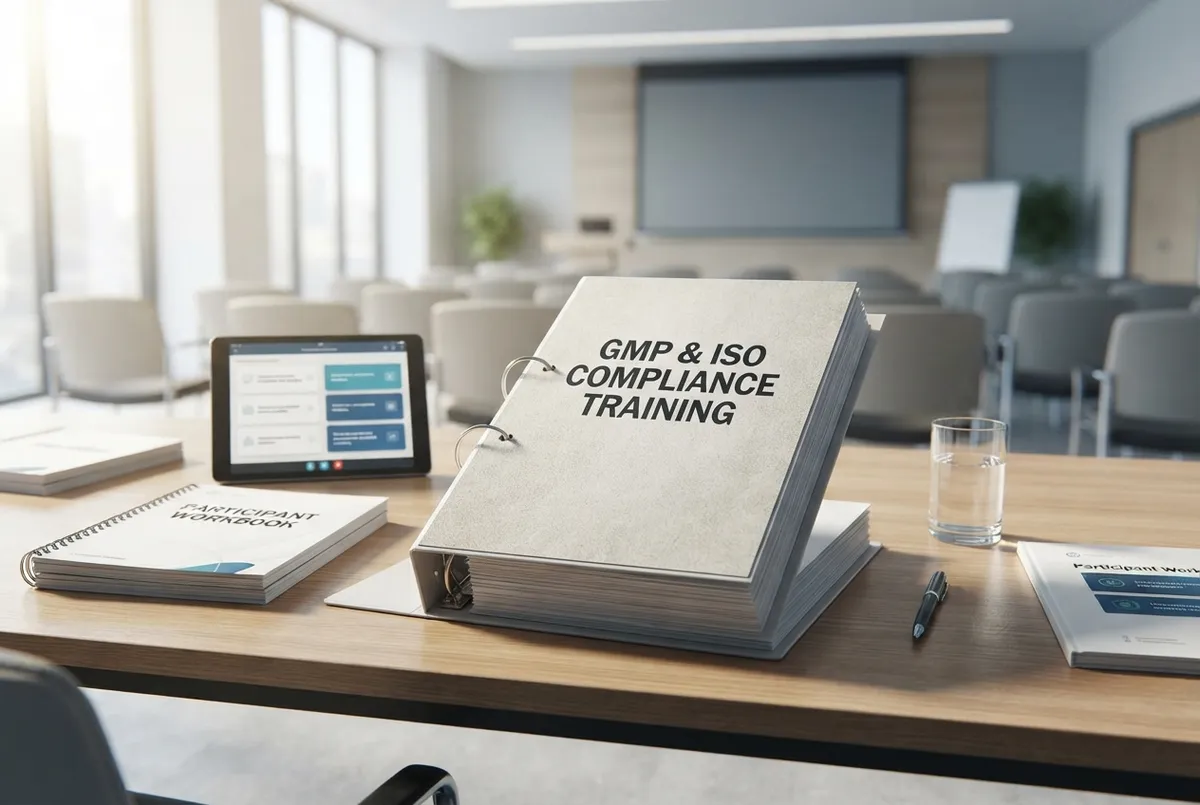
Upon securing a license, organizations receive comprehensive trainer guides, detailed participant workbooks, presentation slides, and validated assessment tools. This turnkey architecture ensures that internal facilitators possess all necessary resources to deliver technical content effectively. The inclusion of standardized assessments is particularly crucial, as it provides objective, audit-ready documentation of employee competency, satisfying the strict training verification requirements imposed by international regulatory inspectors.
Maintaining Regulatory Currency through Licensed Content
Regulatory frameworks are not static; they evolve in response to technological advancements, scientific discoveries, and emerging safety data. Keeping training materials aligned with the latest updates—such as revisions to PIC/S GMP guides or updates to ISO standards—presents a continuous maintenance burden for individual companies.
The licensing model addresses this challenge by outsourcing content maintenance to dedicated regulatory specialists. When international guidance documents or consensus standards are modified, the core training materials undergo formal revision control processes to incorporate these updates. Licensed organizations receive access to these updated modules, ensuring that their internal training programs remain current and fully aligned with modern regulatory expectations without requiring internal administrative overhead.
Conclusion
Building long-term technical capability within the therapeutic goods, laboratory, and biotechnology sectors requires an ongoing commitment to structured workforce education. Relying on fragmented or outdated training materials introduces unnecessary compliance risks and operational inefficiencies. Licensing validated, scientifically rigorous GMP and ISO courseware from QSN Academy provides an optimal pathway for organizations wishing to control their training schedules, reduce development overhead, and foster a robust, compliant quality culture from within. Organizations interested in transforming their internal training infrastructure and deploying pre-validated compliance courseware are invited to initiate a discussion regarding available licensing structures to meet their specific operational goals.
